The SEO Roadmap for 2026: Content, Crawlers, and Core Signals
For the last decade, SEO meant one thing: rank higher than everyone else on the first page. Get the click. Get the session. Convert.
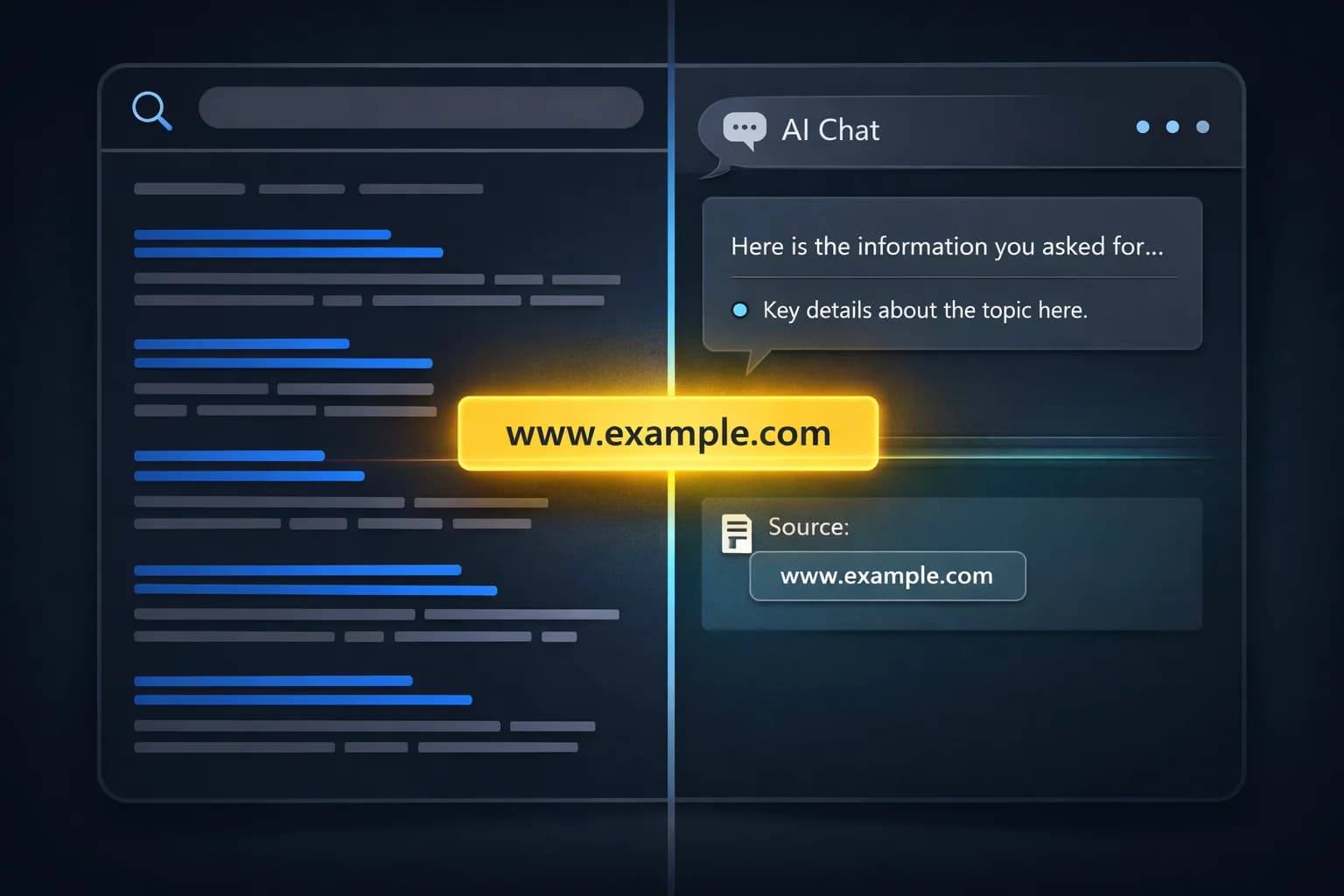
That model still works. But it now competes with a parallel system where Google answers your user's question before they ever visit your site. AI Overviews appear in over 50% of queries today. ChatGPT handles billions of searches a month. Perplexity is eating into research-heavy queries. The user got their answer. Your page never loaded.
Here is what changes when that happens, and what you need to do differently.
The Core Problem: Zero-Click Is Real, But Misunderstood
Zero-click search has been a topic since featured snippets launched. The difference in 2026 is scale and quality. AI Overviews are not just pulling a paragraph from your page. They are synthesizing answers from multiple sources, citing some, ignoring others, and presenting a confident response.
The brands getting cited in those answers see roughly 35% more clicks than brands that only appear in organic results. The brands not cited at all are becoming invisible to an entire class of user.
This is not a reason to panic. It is a reason to shift how you think about what SEO is actually optimizing for. The goal is no longer just rank position. The goal is being the trusted source an AI system reaches for when it constructs an answer.
The good news: the signals that make you trustworthy to an AI system are the same signals that make you rank well in traditional search. Fast site, clean structure, accurate content, strong backlink profile, clear authorship. The fundamentals have not changed. The stakes on getting them right just went up.
What Crawlers Are Actually Visiting Your Site in 2026
Before anything else, you need to understand who is showing up. Most site owners only think about Googlebot. By 2026, a much larger cast of crawlers is visiting regularly, each serving a different purpose.
Search indexing bots are the classics. Googlebot indexes your content for Google Search and Google's AI features. Bingbot feeds Bing and Microsoft Copilot. Applebot powers Siri and Spotlight, which matters significantly if your audience is heavy iPhone users. DuckDuckBot serves privacy-conscious searchers.
AI training crawlers are newer and operate at much higher volume. GPTBot (OpenAI) and ClaudeBot (Anthropic) scrape content to train their models. Meta-ExternalAgent does the same for Meta's AI products. Amazonbot feeds Amazon's systems. These bots often crawl aggressively, sometimes multiple times per day, because they are ingesting the web at scale.
User-triggered crawlers are the most interesting category. When someone asks ChatGPT a question and ChatGPT decides to browse the web for a real-time answer, it sends a ChatGPT-User request to your server. Same with Perplexity's bot. These visits are happening because a human is actively asking for information, which means they convert differently than training crawls.
| Bot | Company | Purpose |
|---|---|---|
| Googlebot | Search indexing and AI Overviews | |
| Bingbot | Microsoft | Search indexing and Copilot |
| Applebot | Apple | Siri and Spotlight |
| GPTBot | OpenAI | Model training |
| ClaudeBot | Anthropic | Model training |
| Meta-ExternalAgent | Meta | AI model training |
| ChatGPT-User | OpenAI | Live query browsing |
| PerplexityBot | Perplexity | Live AI search answers |
| CCBot | Common Crawl | Open AI training datasets |
| Google-Extended | Gemini training only |
Cloudflare data from early 2026 shows Googlebot at roughly 39% of AI-related bot traffic, GPTBot at 13%, and Meta-ExternalAgent at 12%. GPTBot alone grew from 5% to 30% of AI crawler share between May 2024 and May 2025. That trajectory is not slowing down.
The practical implication: check your server logs or Cloudflare analytics. You may be getting significant AI crawler traffic you were not aware of, and your current robots.txt may or may not be handling it the way you want.
Technical Foundation: What Every Crawler Needs From You
None of the strategy around AI citations or content authority matters if crawlers cannot reach your pages. Get the technical layer right first.
Robots.txt
Run this check right now:
curl https://yourdomain.com/robots.txt
Look for any Disallow: / rules under User-agent: *. A single misplaced line can hide your entire site from every bot simultaneously. It happens more often than you would expect, usually after a developer adds a blanket block during a staging migration and forgets to remove it.
Your baseline should be something like:
User-agent: *
Allow: /
Sitemap: https://yourdomain.com/sitemap.xml
Then add specific rules if you want to manage individual bots. More on that below.
Sitemaps
A sitemap is your site telling crawlers exactly what exists and what has changed. Keep it dynamic, not static. Every time you publish or update a significant page, your sitemap should reflect that immediately. Many CMSs handle this automatically, but verify it is actually working.
Submit your sitemap in Google Search Console and Bing Webmaster Tools. When you publish something important, ping Google's Indexing API if your content qualifies (job postings, live event pages, and a handful of other content types get priority crawling through the API).
Structured Data
Schema markup is now table stakes, not a bonus. JSON-LD structured data lets both traditional search engines and AI systems understand what your content is about without inferring it from prose.
For a blog, at minimum you want Article or BlogPosting schema with author, date, and organization information. For product pages, Product schema with real-time inventory and pricing becomes critical as AI shopping assistants start executing purchases on behalf of users. For FAQ sections, FAQPage schema makes your answers available for direct inclusion in AI Overviews.
If you want to test whether your structured data is being read correctly, use Google's Rich Results Test. Fix any errors it flags before they compound.
Core Web Vitals and Site Performance
Crawlers have a crawl budget. If your pages are slow, bots spend their budget waiting for your server instead of discovering your content. This is especially true for AI training crawlers that are trying to ingest thousands of pages efficiently.
LCP under 2.5 seconds, CLS under 0.1, INP under 200ms. If you are not hitting those on mobile, that is where to start. Compress images, use a CDN, defer non-critical JavaScript, and make sure your hosting can handle concurrent crawl traffic without degrading.
Site Structure and Internal Linking
A flat, logical site structure where every important page is reachable within three clicks from the homepage is not just good UX. It is how crawlers verify topical relevance. A page with strong internal links from related content reads as more authoritative than an orphan page, regardless of how good the content is.
Audit your internal linking regularly. When you publish a new piece, find three to five existing pages where it makes sense to add a contextual link to the new content.
Content Strategy: From Keywords to Topical Authority
Keyword density as a primary optimization signal is dead. Not dying. Dead. Modern search systems, especially AI-driven ones, evaluate topical coverage, entity relationships, and content depth.
The mental model that works in 2026 is topical authority. Pick the subject areas where your business has real expertise. Build comprehensive coverage of each area. Cover the main topic in a cornerstone piece, then build out supporting articles that address specific questions, sub-topics, and adjacent concepts. Link them together deliberately.
This matters for two reasons. First, it signals to Google that you are a genuine authority on the subject, not a site that posted one article to chase a keyword. Second, when an AI system is constructing an answer about a topic, it draws on the most comprehensive and consistently reliable sources it has been trained on or can access. A site with ten deeply researched articles on a topic is a better source than ten different sites with one shallow article each.
Writing for AI Citation
When you write an article today, you are writing for three readers simultaneously: the human visitor, Google's ranking system, and the AI systems that may synthesize your content into an answer.
Writing for AI citation is not a separate skill. It is a consequence of writing well. Specific, accurate claims with evidence attached. Clear structure with descriptive headings. Direct answers to the question posed by the article, not buried in paragraph seven. Original data, analysis, or perspective that cannot be found anywhere else.
That last point is increasingly important. AI systems are trained to synthesize and summarize. If your content is itself a summary of other sources, there is no reason for an AI to cite you specifically. The content that gets cited is the content that contains something you cannot find elsewhere: a proprietary study, a specific data point, a practitioner perspective, a unique framework.
Build that into your content strategy. What does your business know from direct experience that nobody else knows? That is your moat.
E-E-A-T in Practice
Experience, Expertise, Authoritativeness, and Trustworthiness are not a checklist. They are a description of what genuinely good content looks like.
Experience means your content reflects actual time spent in the trenches, not theoretical knowledge. If you are writing about Google Ads, the article should reflect having managed Google Ads accounts, not having read about managing them.
Expertise means depth. Not word count. Depth. Does the article address the real complexity of the topic, or does it skim the surface with generic advice?
Authoritativeness means your domain and your authors are recognized as credible sources. This builds over time through backlinks, citations, mentions in respected publications, and a consistent track record of accurate content.
Trustworthiness means your site signals legitimacy at every level: HTTPS, clear authorship, accurate information that gets updated when it changes, no misleading claims.

Measuring What Actually Matters in 2026
Traditional rank tracking is still useful but incomplete. Add these to your measurement stack:
AI citation monitoring. Manually test your key topics in ChatGPT, Perplexity, and Google's AI Overviews. Is your brand or content being cited? If not, what source is being used instead? That tells you who you are competing with for citation.
AI-referred traffic. Google Analytics 4 and some third-party tools are beginning to label sessions that originated from AI tools. These sessions convert at roughly four times the rate of generic search traffic. Track them separately.
Brand search volume. When people trust your brand, they search for it directly. Rising branded search volume is a strong signal that your content strategy is working and that your brand is being recommended, whether by AI systems or by word of mouth.
Backlink quality. Not quantity. Quality. A link from a publication that AI systems treat as authoritative is worth more than a hundred links from low-authority sites. Track the editorial quality of your link profile, not just the count.
The Practical Priority List
If you are looking at 2026 SEO and trying to decide where to spend your time, this is the order:
- Fix any technical issues that block crawlers from reaching your content. Check robots.txt, fix broken pages, address Core Web Vitals.
- Implement structured data across your key page types. Start with Article and FAQ schema.
- Audit your existing content for topical depth. Identify thin pages and either improve them substantially or remove them.
- Build out topic clusters in your core subject areas. Cornerstone articles supported by linked sub-topics.
- Add authorship, credentials, and original data to your most important pages.
- Set up monitoring for AI citation and AI-referred traffic.
- Build a consistent publishing cadence. Crawl frequency correlates directly with update frequency.
The sites that will dominate search in 2026 are not chasing algorithm tricks. They are building the kind of content infrastructure that makes them the obvious choice for both a human researcher and an AI system constructing an authoritative answer.
For the hands-on technical implementation of everything covered here, including how to verify crawler access, configure robots.txt for AI bots, and implement structured data correctly, see Technical SEO and AI Crawlers in 2026.
Frequently Asked Questions
What is the biggest SEO change in 2026? The shift from ranking for clicks to being cited by AI systems. Google's AI Overviews now appear in over 50% of queries, meaning users often get an answer without visiting any page. The sites that win are the ones AI systems trust enough to cite, which requires the same fundamentals as traditional SEO but with added emphasis on structured data, topical depth, and original content.
How do I get my website cited in AI Overviews? Focus on three things: structured data that makes your content machine-readable, topical authority through comprehensive coverage of your subject area, and original data or perspective that AI systems cannot synthesize from other sources. Clear heading structure, direct answers to common questions, and strong E-E-A-T signals all increase your chances of being selected as a source.
Does traditional SEO still matter in 2026? Yes. The technical fundamentals have not changed. A site that is fast, crawlable, well-structured, and backed by quality backlinks performs well in both traditional search and AI-driven search. AI systems depend on the same crawlable, high-quality data that traditional search engines do. The difference is that the bar for content depth and originality has risen.
What is topical authority and why does it matter? Topical authority means your site is recognized as a comprehensive, reliable source on a specific subject area. You build it by covering a topic deeply across multiple interlinked articles rather than publishing isolated posts targeting individual keywords. Search engines and AI systems both reward sites that demonstrate consistent expertise in a domain over sites that cover topics superficially or inconsistently.
How do I measure SEO success when AI Overviews reduce clicks? Expand your measurement beyond rank position and click volume. Track AI citation by manually testing your key topics in ChatGPT, Perplexity, and Google's AI Overviews. Monitor AI-referred sessions in GA4, which convert at roughly four times the rate of generic search traffic. Watch branded search volume as a proxy for growing authority. And track backlink quality from publications that AI systems treat as authoritative sources.
What SEO tactics no longer work in 2026? Keyword stuffing, thin content targeting individual search terms, low-quality link building at scale, and publishing AI-generated content without genuine expert review or original insight. Google's Helpful Content system actively downgrades sites where a significant portion of content exists primarily to rank rather than to help a real reader.
Sources
- Search Engine Land — SEO in 2026: What Will Stay the Same
- Search Engine Land — AI Search Visibility and SEO Predictions for 2026
- Cloudflare Radar — AI Crawler Traffic Trends and GPTBot Growth
- Averi AI — SEO Trends for 2026 and the Rise of AI-Driven Search
- DigitalConfex — AI SEO in 2026: Why Traditional SEO Is No Longer Enough